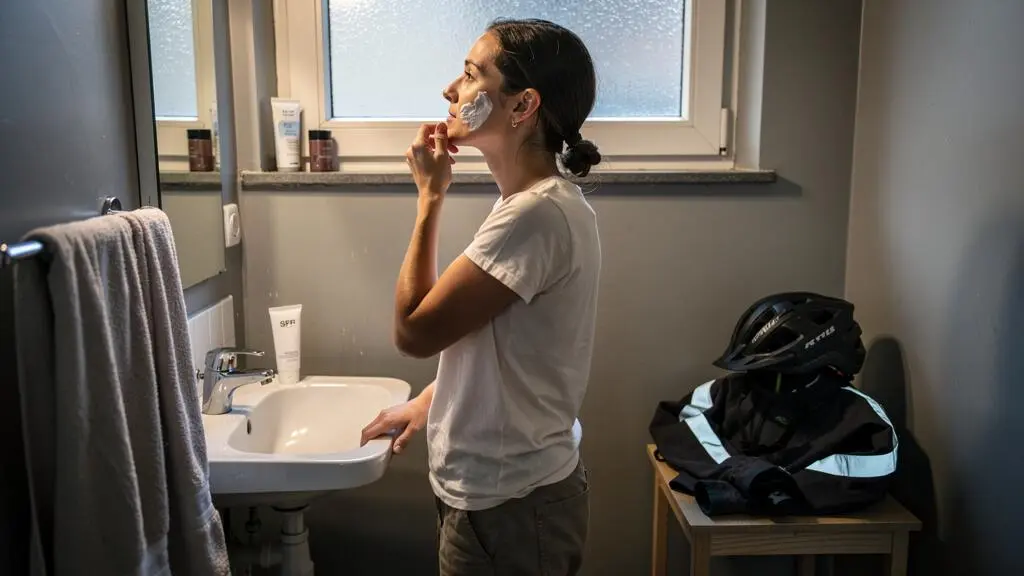
A facial care routine has to work on Tuesday morning, not just on a relaxed Sunday. Between cycling through Brussels traffic, rushing to a meeting in Antwerp, managing a family schedule in Ghent or sitting in a heated office during a Belgian winter, elaborate skincare can quickly become another task that gets abandoned.
The practical solution is to build around three everyday priorities: gentle cleansing, adequate moisturization and reliable sun protection. Additional treatments should earn their place by addressing a specific concern without making the routine harder to maintain.
Belgium’s changing weather adds another consideration. Cold wind, indoor heating, perspiration and seasonal temperature changes can make already sensitive skin feel uncomfortable. Rather than changing products whenever conditions shift, a dependable routine keeps its essential steps and adjusts treatment intensity when necessary.
The aim is not flawless compliance or immediate results. It is a manageable system that continues working through demanding commutes, late evenings and periods when the skin needs extra care.
Your Belgian weekday skincare essentials
- Keep mornings simple: moisturize, protect with broad-spectrum SPF 30 or higher, and cleanse gently when needed.
- Introduce one new treatment at a time, allowing enough observation time to identify irritation or improvements.
- Adjust active-ingredient frequency when cold wind, indoor heating or seasonal changes leave skin uncomfortable.
- Why Do Most Skincare Routines Fail by Day 7 — Even When the Products Are “Good”?
- How to Build a 3-Step Morning Routine That Works Under SPF and Makeup
- Actives-First or Barrier-First: Which Strategy Fits Skin That Flushes Easily?
- The New-Routine Mistake That Makes It Impossible to Know What Broke You Out
- In What Order Should You Add Serums and Exfoliants So Your Routine Sticks Past 30 Days?
- How to Remove Pollution Residue at Night Without Over-Cleansing Your Skin
- How to Choose One Active Ingredient and Use It 2 Nights a Week Without Irritation
- How Can You Prevent Skin Irritation When You Use Actives and Belgium’s Weather Keeps Changing?
Why Do Most Skincare Routines Fail by Day 7 — Even When the Products Are “Good”?
Skincare routines often become difficult to maintain because they require more time, decisions and preparation than an ordinary weekday allows. A collection of well-formulated products cannot compensate for an impractical schedule. If skincare becomes the first activity sacrificed during a rushed morning, simplifying the process is usually more useful than purchasing another product.
Consider a hypothetical commuter who plans to use a cleanser, toner, two serums, moisturizer, sunscreen and makeup every morning. When a meeting starts early or the children need extra attention, completing the full sequence becomes unrealistic.
The problem is not necessarily any individual product. It may be the routine’s design: too many choices, too many applications and no shortened version for difficult days.
Before changing products, identify what actually happened.
| What happened? | Likely issue to investigate | Practical next step |
|---|---|---|
| You stopped using the products. | The routine may be too demanding. | Remove optional steps and anchor essentials to existing habits. |
| Your skin began stinging or looking inflamed. | A product, combination or environmental factor may be irritating it. | Pause suspected irritants and simplify while assessing the reaction. |
| You noticed no visible improvement. | The evaluation period may be too short. | Check realistic response times before switching treatments. |
Day seven is a particularly poor point for declaring that an acne treatment has failed. The American Academy of Dermatology explains that improvement in breakouts may take four to eight weeks, while more complete clearing can take longer. Its adult acne treatment recommendations suggest allowing six to eight weeks to evaluate a treatment’s effectiveness, provided it is tolerated.
Different observations deserve different responses. A moisturizer making skin feel more comfortable is encouraging, but not proof that every underlying concern has improved. Persistent burning, significant redness or swelling should not be accepted as an unavoidable adjustment period.
For Belgian commuters, a routine that survives wind, damp weather, heated offices and a hurried evening is generally more practical than one that depends on an uninterrupted bathroom ritual.
Once unnecessary decisions are removed, the next task is to make the morning sequence short enough to repeat even when the day starts badly.
How to Build a 3-Step Morning Routine That Works Under SPF and Makeup
A practical three-step morning routine should prepare the skin, provide adequate moisture and finish with effective sun protection. For most busy mornings, this means gentle cleansing when needed, a suitable moisturizer and broad-spectrum sunscreen. The products should layer comfortably under makeup without requiring several additional treatments or complicated application techniques.
The first step is flexible. If the skin feels comfortable after waking, rinsing with lukewarm water may be sufficient for some people. Those with noticeable overnight oiliness or residue may prefer a gentle cleanser. Avoid harsh scrubbing, especially when the skin already feels dry.
Next, choose a moisturizer appropriate for the day’s conditions. A lightweight cream may feel comfortable beneath makeup during a mild spring morning. In colder conditions, someone experiencing tight cheeks after cycling may prefer a richer, fragrance-free formula.
Finish with sunscreen that offers broad-spectrum UVA and UVB protection, SPF 30 or higher and water resistance, particularly when commuting outdoors.
The American Academy of Dermatology sunscreen application recommendations advise applying sunscreen approximately 15 minutes before outdoor exposure and reapplying when necessary, including after sweating.
Apply an adequate amount and allow the sunscreen to form an even layer before makeup. A comfortable finish around the eyes matters for cyclists because sweat and movement may make irritating formulas especially inconvenient.
Layering compatibility also matters. Heavy moisturizers may contribute to pilling beneath some fluid sunscreens, while certain makeup primers may not sit comfortably over every skincare formula.
A quick back-of-the-hand layering trial can reveal obvious rolling or separation before you commit to a combination. However, it is only a practical texture check, not a validated compatibility test or a substitute for checking facial tolerance.
When makeup is involved, let each layer settle without excessive rubbing. Avoid sacrificing sunscreen coverage merely to achieve a smoother cosmetic finish.
Vitamin C or other treatment serums are not automatically unsuitable for morning use. Nevertheless, if several products cause stinging or complicate makeup application, moving optional treatments to the evening is a reasonable way to simplify. Ordinary screen exposure alone does not justify adding extra active ingredients.
A comfortable morning routine also creates a useful baseline for deciding whether sensitive skin should receive treatment actives or additional barrier support.
Actives-First or Barrier-First: Which Strategy Fits Skin That Flushes Easily?
Skin that flushes, stings or feels tight often benefits from a barrier-first approach before introducing potentially irritating active ingredients. Barrier-first skincare focuses on gentle cleansing, moisturization and sun protection. Actives-first skincare prioritizes treatments for concerns such as acne, pigmentation or uneven texture. Neither strategy is universally correct, but current skin tolerance should determine the starting point.
A barrier-supporting routine generally uses a mild cleanser, moisturizer containing suitable humectants and emollients, and consistent sunscreen. Ceramides and other skin-compatible lipids can be useful ingredients, although the complete formulation matters more than any single label claim.
An actives-first strategy may include retinoids, exfoliating acids or other targeted treatments. These can be appropriate for specific concerns, but their benefits do not remove the need to maintain the skin barrier.
For someone cycling through cold air before entering a heated office, discomfort may fluctuate throughout the day. Environmental exposure can complicate the assessment of whether a treatment is being tolerated.
Use a practical self-check before adding an active:
- Skin appears comfortable: a plain moisturizer does not sting, cleansing does not leave prolonged tightness, and recent redness is not worsening.
- Skin appears unsettled: moisturizer burns, visible irritation persists, or ordinary washing causes marked discomfort.
- Flushing is frequent or unexplained: repeated facial redness warrants professional assessment, particularly if accompanied by bumps, swelling or eye symptoms.
These observations help guide routine adjustments; they cannot diagnose a damaged skin barrier or rule out rosacea, dermatitis or another condition. There is also no universal number of minutes after which flushing becomes medically significant.
The American Academy of Dermatology’s rosacea skincare recommendations emphasize gentle cleansing, moisturizing and sun protection for rosacea-prone skin, along with avoiding ingredients that trigger irritation.
Seasonal adjustments should remain proportional. In winter, an additional moisturizing layer or richer cream may improve comfort. During a milder period, previously irritating products may be easier to tolerate, but seasonal timing does not guarantee safety.
Even an exfoliant marketed as gentle can cause discomfort on already irritated skin. Product concentration matters, but so do application frequency, formulation and the condition of the skin receiving it.
Once the basic routine feels dependable, introducing new products separately makes it much easier to understand how the skin responds.
The New-Routine Mistake That Makes It Impossible to Know What Broke You Out
Starting several unfamiliar skincare products simultaneously makes reactions difficult to investigate. If a new cleanser, serum, moisturizer and exfoliant all arrive during the same week, a breakout or episode of irritation cannot easily be attributed to one change. Introducing products separately creates a clearer record of what was added and when symptoms appeared.
Imagine a hypothetical Belgian office worker who switches an entire routine at the beginning of November. A few days later, the cheeks become red and uncomfortable. The cause might involve one of the formulas, their combined effects, increased exposure to cold wind or another factor altogether.
The sensible approach is to reduce uncertainty rather than immediately purchase more products.
Before applying a new skincare product broadly, the American Academy of Dermatology’s skincare product testing instructions recommend applying the product to a small test area twice daily for seven to ten days. For rinse-off products, the recommended contact time is five minutes or the time stated in the instructions.
This preliminary test can help identify some reactions, but a negative result does not guarantee that use on the face will be trouble-free. It also does not replace professional allergy testing when that is necessary.
After preliminary testing, introduce the product into an otherwise stable routine. Record its name, first-use date, frequency and any noticeable skin changes. Allow an observation period before adding another product. A cleanser or moisturizer may be assessed for initial comfort relatively quickly, whereas treatment actives generally require longer monitoring.
Breakouts and irritation are not interchangeable. Acne lesions, itching, burning and swelling may reflect different problems. Not every breakout after starting skincare is a harmless treatment-related adjustment.
If several new products have already caused confusion, return to the last well-tolerated simple routine where possible. Avoid suspected irritants while the skin settles, then reconsider products individually. Significant swelling, persistent inflammation or worsening symptoms justify medical assessment rather than repeated home experimentation.
Keeping a stable baseline is particularly useful during Belgium’s transition into colder weather, when environmental changes may occur at the same time as product changes.
With clearer product attribution, the next challenge is choosing the order and frequency of additional treatments without rebuilding an unnecessarily complicated routine.
In What Order Should You Add Serums and Exfoliants So Your Routine Sticks Past 30 Days?
Establish a dependable cleansing, moisturizing and sunscreen routine before introducing optional serums or exfoliants. Add one product at a time, beginning with the product most relevant to your main skin concern. If exfoliation is genuinely needed, introduce it cautiously on separate evenings rather than stacking multiple treatments. Fixed, manageable application days make the routine easier to maintain.
A serum is a product format, not a single treatment category. A hydrating serum may support moisture retention, while an exfoliating or retinoid serum has different purposes and tolerability considerations.
For a busy adult, the strongest routine is usually the one that can be completed after a late commute, an unexpected family obligation or an exhausting workday.
A practical first-month sequence could look like this:
- Establish the essentials. Use a simple, comfortable morning and evening routine consistently.
- Introduce one optional serum. Select it for a clearly defined concern and assess tolerability before further changes.
- Consider exfoliation only if needed. Start conservatively rather than assuming daily exfoliation is necessary.
- Review the actual effort. Remove steps that consistently become obstacles without delivering a clear benefit.
If the skin is stable and an active treatment has been selected, a sample weekly calendar can reduce repeated decisions. This is an organizational example, not a universal medical dosing schedule.
| Evening | Planned routine | Adjustment |
|---|---|---|
| Monday | Gentle cleanse, selected active if tolerated, moisturizer | Replace the active with moisturizer alone if irritated. |
| Tuesday | Gentle cleanse and moisturizer | Keep the routine simple. |
| Wednesday | Gentle cleanse and moisturizer | Observe comfort. |
| Thursday | Gentle cleanse, selected active if tolerated, moisturizer | Skip treatment when the skin is unsettled. |
| Friday | Gentle cleanse and moisturizer | Avoid unnecessary additions. |
| Saturday | Gentle cleanse and moisturizer | Keep a fallback routine available. |
| Sunday | Gentle cleanse and moisturizer | Review the week’s observations. |
For this example, the selected active might be an exfoliant or a retinoid, not both. Avoid combining multiple exfoliating acids on the same evening, and separate retinoid and acid use unless a clinician specifically recommends otherwise.
Hydrating serums generally go before thicker moisturizing products, although individual formulation instructions take priority.
Expectations also need to match the product’s purpose. Hydrating formulas may produce an earlier change in how comfortable skin feels. Some exfoliants may affect perceived smoothness, but longer-term outcomes vary. Acne treatments frequently require several weeks before their effectiveness can be assessed.
Your five-action routine setup checklist
- Write down your available morning and evening time slots. Deliverable: two realistic routine windows in your calendar.
- Select your essential cleanser, moisturizer and sunscreen. Deliverable: a short, identifiable core product list.
- Choose one main skin concern and, if appropriate, one treatment to investigate. Deliverable: a written goal and product name.
- Set preliminary testing and treatment days that fit the product’s instructions and your tolerance. Deliverable: a simple weekly schedule.
- Track comfort, reactions and completed steps during the first month. Deliverable: a dated log to guide adjustments.
A well-planned product calendar is only useful if evening cleansing leaves the skin comfortable enough to follow it.
How to Remove Pollution Residue at Night Without Over-Cleansing Your Skin
Evening cleansing should remove sunscreen, makeup, sebum and accumulated residue without leaving the face tight or irritated. A gentle single cleanse is sufficient for many ordinary days. Double cleansing may be useful when removing substantial makeup or persistent water-resistant sunscreen, but it should not be treated as mandatory for everyone who commutes or works in a city.
For someone cycling through central Brussels or along busy roads near Antwerp, traffic-related particulate exposure is a reasonable consideration. Airborne particles can settle on exposed surfaces, including skin, although the amount varies with route and conditions.
That exposure supports consistent evening hygiene, not aggressive scrubbing or repeated washing.
Choose the cleansing method based on what was actually worn and encountered during the day.
| Day’s conditions | Reasonable cleansing approach |
|---|---|
| Ordinary office day with light sunscreen and no makeup | Start with one gentle cleanse that removes the sunscreen effectively. |
| Long cycling commute with sweat and sunscreen | Use a thorough but gentle cleanse, adjusting if residue remains. |
| Heavy makeup or persistent water-resistant sunscreen | Consider a suitable first-step remover followed by a gentle cleanser if needed. |
| Already irritated or unusually dry skin | Minimize rubbing and avoid unnecessary repeated cleansing. |
When double cleansing, a cleansing balm or oil-based remover may help dissolve makeup and sunscreen before a mild water-based cleanser. The second step should be chosen for comfort and need, not added automatically.
Over-cleansing can disturb the skin’s natural lipids and contribute to dryness or irritation. Very hot water, abrasive washcloths and repeated cleanser applications may make the problem worse.
After rinsing, observe how the skin feels. Persistent tightness, a squeaky sensation or increased stinging suggests that the cleansing method may be too harsh. Try a milder formulation or reduce unnecessary cleansing steps.
Follow with moisturizer while the skin is still slightly damp if that feels comfortable and is compatible with the product instructions.
The important distinction is between removing residue and trying to make the skin feel completely stripped of oil. Clean skin does not need to feel dry to be adequately cleansed.
Once evening cleansing is consistent and comfortable, a carefully selected active ingredient can be introduced without placing additional demands on the entire routine.
How to Choose One Active Ingredient and Use It 2 Nights a Week Without Irritation
Choose an active ingredient according to a specific skin concern, then introduce it at a frequency your skin can tolerate. Two non-consecutive evenings per week can be a conservative scheduling option for certain formulations, but it is not universally appropriate. Product instructions, ingredient strength, existing sensitivity and any clinician’s guidance must take priority over a fixed calendar.
Start with the problem you actually want to address rather than the ingredient attracting the most attention online.
| Main concern | Ingredient to consider | Important limitation |
|---|---|---|
| Uneven texture and fine lines | Appropriate retinoid formulations | May irritate; suitability depends on formulation and personal circumstances. |
| Mild acne and post-acne dark marks | Azelaic acid | Can cause irritation and is not a universal treatment for facial flushing. |
| Congestion and clogged pores | Salicylic acid | Excessive exfoliation may worsen dryness or irritation. |
| General dullness | A suitable exfoliating acid, if needed | Not essential for everyone, particularly those with reactive skin. |
Retinoids, azelaic acid and exfoliating acids have different mechanisms and indications. They should not be treated as interchangeable simply because they appear in the same skincare category.
For a suitable leave-on active that is being introduced cautiously, Monday and Thursday might be convenient trial evenings. The separation gives room to observe comfort and avoids turning treatment into a nightly obligation.
Some products require a different schedule for effectiveness or safety, while others may be too irritating even at low frequency. Check the label and obtain professional advice when uncertain.
For potentially irritating leave-on products, applying them to fully dry skin can help some users reduce discomfort. Follow the product’s instructions and keep a compatible moisturizer in the routine.
Some people tolerate a moisturizer-before-and-after approach, sometimes called sandwiching, with certain retinoid products. However, this technique is not suitable for every active or formulation and should not override prescribed directions.
Do not combine a new retinoid with exfoliating acids on the same trial evening. Avoid simultaneously adding other potentially irritating treatments.
If discomfort develops, reduce frequency or pause the active rather than interpreting persistent irritation as proof that it is working.
Pregnancy or pregnancy planning requires particular caution with retinoids; obtain medical advice rather than starting them independently.
Timing matters in daily life too. Someone whose cheeks are already irritated by a winter bicycle commute may benefit from postponing a new treatment until the skin feels settled. There is no guarantee that a milder season will make a product tolerable, but avoiding an already-irritated baseline makes reactions easier to interpret.
The final element is knowing when to depart from the schedule because skin comfort and environmental exposure have changed.
Key takeaways before adjusting for the weather
- Use actual signs of irritation, not the calendar alone, to decide whether a treatment night should go ahead.
- Keep your basic moisturizing and sun-protection steps stable when changing active frequency.
- Plan simpler evenings in advance so seasonal discomfort does not cause you to abandon the entire routine.
How Can You Prevent Skin Irritation When You Use Actives and Belgium’s Weather Keeps Changing?
Preventing skincare irritation during Belgium’s changing seasons means keeping a stable basic routine while adjusting optional treatments to current skin tolerance. Cold wind, indoor heating, perspiration and shifts in humidity may aggravate discomfort, particularly when irritating actives are already being used. On unsettled days, replacing a treatment evening with gentle cleansing and moisturizing is often the more sensible choice.
Consider a hypothetical winter week in which someone cycles to work through cold wind, spends the day in a centrally heated office and returns home with visibly irritated cheeks.
Following an exfoliation schedule rigidly despite that discomfort would prioritize the calendar over the condition of the skin. A better approach is to keep the routine’s basic protective elements and omit the optional exfoliant until comfort returns.
This does not mean that cold weather automatically makes every active unsuitable. Responses vary with skin condition, formulation, concentration and exposure. Instead, weather becomes one factor in a broader tolerance check.
The following adjustments provide a practical seasonal framework rather than a medical treatment protocol.
| Situation | Routine adjustment |
|---|---|
| Cold, windy cycling commute with tight cheeks | Reinforce suitable moisturization and avoid unnecessary exfoliation if irritated. |
| Long day in a heated office | Consider a more comfortable moisturizer if dryness develops. |
| Mild weather and comfortable skin | Maintain the established routine and use a tolerated active as directed. |
| Visible flushing, stinging or persistent tightness | Pause optional irritants and prioritize gentle care. |
| Outdoor activity with perspiration | Maintain appropriate water-resistant sunscreen coverage and reapply when needed. |
Sun protection remains important throughout the year. Belgian cloud cover and cool temperatures should not be confused with an absence of ultraviolet exposure. For daily outdoor activity, choose adequate broad-spectrum protection and adapt application to the amount of time spent outside.
Barrier-supporting moisturization can also be adjusted without redesigning the entire routine. A richer product during a dry winter period may be reasonable, while a lighter texture may be more comfortable during warmer months.
What matters is observing whether these adjustments actually improve comfort rather than assuming that every seasonal change requires new purchases.
For people with rosacea-prone skin or persistent flushing, recurring symptoms deserve individual assessment. Wind, temperature changes and certain cosmetic ingredients may be relevant triggers, but redness should not automatically be attributed to weather or skincare actives.
A useful approach is to define a minimum routine: gentle cleansing as needed, moisturizer and suitable daytime sun protection. These are the steps retained when meetings run late, travel disrupts normal habits or skin becomes reactive.
Additional treatments can then be scheduled around this foundation instead of being treated as essential tasks that must never be missed.
Review the routine periodically using three questions: Is it comfortable? Is it manageable on the busiest days? Is each optional product addressing a meaningful concern?
If an active repeatedly causes irritation despite appropriate adjustments, the next step is to reconsider its suitability with a qualified professional, not simply to keep trying it indefinitely.
For the coming week, choose your essential morning and evening steps, prepare one simplified fallback routine and mark only the treatment evenings that are appropriate for your skin. A facial care routine that fits a busy Belgian week is not one that ignores changing circumstances; it is one that can adapt without falling apart.
Can moisturizer with SPF replace separate sunscreen in the morning?
A moisturizer with broad-spectrum SPF 30 or higher may provide suitable protection when applied in the required quantity and reapplied appropriately. However, people often apply moisturizers more sparingly than sunscreen. If adequate coverage is difficult, using a dedicated sunscreen can be more practical, particularly before cycling outdoors.
Should you wash your face again after cycling to work?
Not necessarily. After a sweaty commute, a gentle rinse or cleanse may improve comfort, but repeated full cleansing is not automatically needed. Consider how much you perspired, whether the skin feels irritated and whether cleansing will remove sunscreen that must then be reapplied before further exposure.
Can you skip your active ingredient for a week without restarting everything?
For many optional cosmetic treatments, a short pause does not mean the entire routine must be restarted. However, maintaining results and restarting safely depend on the ingredient and formulation. Follow any prescribed regimen, and consider a cautious return if your skin has become sensitive during the break.
Is expensive skincare necessary for a reliable routine?
No. Price alone does not establish effectiveness, compatibility or tolerability. Prioritize a cleanser that leaves the skin comfortable, a moisturizer appropriate to your needs and sunscreen that you can apply adequately and consistently. Optional treatments should be chosen for a defined concern rather than for prestige or product count.
When should persistent redness be checked by a dermatologist?
Seek professional assessment when facial redness recurs, persists, worsens or is accompanied by bumps, burning or other troublesome symptoms. Eye irritation alongside facial flushing also warrants attention. A dermatologist can help distinguish possible rosacea, contact dermatitis and other causes rather than relying on repeated product changes.