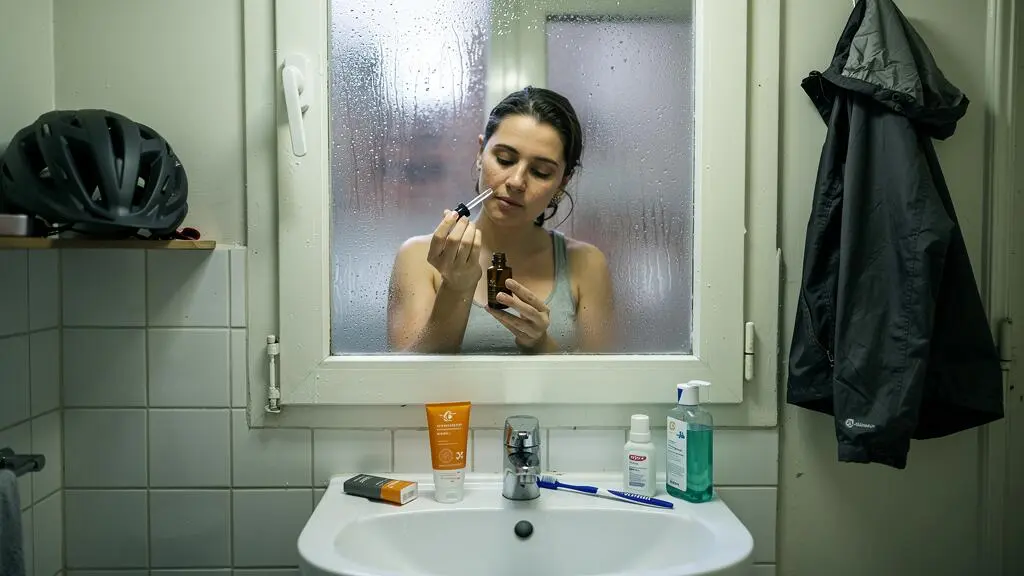
A morning commute through Brussels exposes your skin to more than changing weather. Traffic-related particles, atmospheric pollutants, wind and indoor heating can all contribute to environmental stress, even when you sleep well and apply sunscreen every day.
But protecting your skin does not require a cleanser, toner, essence, three serums, moisturiser and SPF. For most people who prefer uncomplicated skincare, the more sensible approach is to replace an existing product with one that provides suitable antioxidant ingredients, rather than build an entirely new routine.
Vitamin C may be useful if uneven tone and early signs of photoageing are your priorities. A gentler antioxidant formulation may suit skin that flushes easily. And if your existing sunscreen already contains antioxidant ingredients, a separate serum may offer little practical advantage.
The important distinction is between plausible protection against environmental oxidative stress and clinically demonstrated improvements in visible skin ageing. An antioxidant serum is a supporting product, not a substitute for sunscreen, appropriate cleansing or a healthy skin barrier.
Brussels antioxidant skincare: the essentials
- Keep SPF as your foundation. Antioxidants complement sun protection but do not replace it or physically block airborne pollution.
- Choose one compatible formula. Consider vitamin C for pigmentation concerns or a gentler formulation if your skin is reactive.
- Match your routine to your actual exposure. Consider commuting conditions, product stability and evening cleansing before buying another serum.
- Why Does City Life Make Skin Look Tired Faster Even When You Sleep Enough?
- How to Add One Antioxidant Step in the Morning Without Making SPF Pilling?
- Vitamin C or Green Tea Serum: Which Is Better if Your Skin Flushes Easily?
- The Oxidised Vitamin C Mistake That Makes You Waste €30 Without Noticing
- When Should You Prioritise Antioxidants More During the Week if You Commute Daily?
- Why Can City Pollution Make Your Skin Look Grey in Just 14 Days Even With Daily SPF?
- In-Store Refill Station or Sealed Refill Pod: Which Is Safer for Skincare?
- Why Does Your Skin Look Duller After a Week in Brussels Traffic Even If You Use SPF?
Why Does City Life Make Skin Look Tired Faster Even When You Sleep Enough?
City life can make skin appear tired even after adequate sleep because rest does not eliminate environmental exposure. Traffic pollution can contribute to oxidative stress and inflammation, while wind, indoor heating and temperature changes may affect skin hydration. The result can be uneven texture, reduced radiance and discomfort, although pollution is rarely the only explanation.
Three mechanisms deserve attention. The first is exposure to airborne pollutants, including particulate matter and nitrogen dioxide (NO2). Urban residents may encounter these pollutants while walking beside busy roads, cycling near traffic or moving between outdoor streets and transport networks.
The second is oxidative stress. Environmental pollutants can promote the formation of reactive oxygen species, which are involved in biological pathways associated with inflammation and skin ageing. These processes may affect the structures that help skin maintain its appearance over time.
A scientific review on pollution and skin ageing identifies oxidative stress, inflammatory processes, microbiome changes and aryl hydrocarbon receptor activation as relevant mechanisms. This provides biological context, but it does not prove that a particular serum prevents wrinkles or dullness during a Brussels commute.
The third mechanism concerns the skin barrier. Brussels has a temperate maritime climate, with frequent changes between humid outdoor conditions and heated indoor environments. Cold wind and low indoor humidity may increase discomfort or contribute to moisture loss in susceptible skin. Outdoor humidity alone does not guarantee that the skin barrier remains hydrated.
Not every tired complexion is pollution-related. Several clues can help distinguish overlapping concerns:
- Surface dehydration: tightness, fine dehydration lines or temporary roughness, especially after cleansing or exposure to heating.
- Possible environmental stress: recurring dullness or irritation associated with exposure-heavy days, without a single identifiable cause.
- Lifestyle-related fatigue: changes that coincide with insufficient sleep, stress, nutrition or other personal circumstances.
These patterns are observations, not diagnostic tests. No visible sign can reliably identify traffic pollution as the sole cause of dull skin.
The practical response is to protect the barrier and improve an existing routine, rather than assume every dull complexion needs another active ingredient. That principle becomes particularly important when fitting antioxidants beneath sunscreen.
How to Add One Antioxidant Step in the Morning Without Making SPF Pilling?
To add antioxidant protection without sunscreen pilling, use a compatible lightweight formula, apply it in a thin layer and let it settle before sunscreen. If you already use an essence, booster or moisturiser, replacing that product with an antioxidant-containing alternative may be simpler than adding a new step. Product compatibility matters more than following an exact waiting time.
Pilling occurs when layers form small visible rolls or flakes during application. It is usually related to the interaction between formulations, the amount applied, drying behaviour and friction.
Some sunscreens contain film-forming polymers that help create an even protective layer. Combining them with a thick gel, highly structured serum or several additional products can make rubbing and rolling more likely.
A practical application sequence is:
- Cleanse gently, or rinse if that is sufficient for your skin.
- Apply a small amount of antioxidant serum to dry or slightly damp skin, following its instructions.
- Allow the product to settle until the surface is no longer visibly wet or slippery.
- Apply sunscreen evenly, using the quantity directed on the label.
- Avoid repeatedly rubbing the same area once the sunscreen film has formed.
There is no scientifically established universal waiting period that guarantees compatibility between every serum and sunscreen. A formulation that feels slightly tacky may still work well, while another can pill even after it has dried.
Water-based serums are not inherently incompatible with mineral sunscreens, nor are oil-based formulas automatically better. Polymer content, thickeners, emulsifiers and overall formulation can influence the result. Encapsulated antioxidants may improve stability in some products, but encapsulation alone does not guarantee less pilling.
Before introducing a new combination, test the two products on a small area of the hand or jawline. Apply them in the intended order and check for visible rolling, uneven spreading or discomfort.
For a truly minimal routine, the most useful decision is whether you need a separate serum at all.
| Current routine | Minimal adjustment | What to check |
|---|---|---|
| Cleanser + moisturiser + SPF | Consider replacing the moisturiser with one containing suitable antioxidants. | Comfort, hydration and compatibility with SPF. |
| Cleanser + booster + SPF | Replace the booster with a compatible antioxidant formula. | Texture, tolerability and pilling. |
| Cleanser + antioxidant-containing SPF | Keep the routine unchanged if it already meets your needs. | Whether a separate product offers a clear additional purpose. |
| Cleanser + SPF only | Add a serum only if there is a specific concern and the skin tolerates it. | Whether the extra step is useful and sustainable. |
An antioxidant-containing sunscreen is a convenient option, although the presence of an antioxidant on the ingredient list does not independently establish its concentration, stability or clinical benefit.
On a home-working day with limited outdoor exposure, a dedicated antioxidant serum may feel less important. Sunscreen decisions should still reflect UV exposure, including time spent outdoors or near relevant indoor daylight, rather than commuting alone.
Vitamin C or Green Tea Serum: Which Is Better if Your Skin Flushes Easily?
Green tea-based or gently formulated vitamin C derivative products may be more comfortable for skin that flushes easily, but tolerability depends on the complete formula. Pure L-ascorbic acid has stronger clinical evidence for several skin concerns, yet acidic preparations can cause stinging. Neither option is automatically suitable for everyone with sensitive skin or rosacea.
Vitamin C and green tea are both associated with antioxidant activity, but they are not interchangeable in terms of the available evidence.
Topical L-ascorbic acid is particularly well studied for photoageing and pigmentation-related concerns. The systematic review of vitamin C in dermatology describes it as the most clinically validated vitamin C formulation, while emphasising the importance of concentration, delivery and stability.
Conventional aqueous L-ascorbic acid formulations often rely on a low pH, which may contribute to irritation. This is especially relevant when a person already experiences burning, flushing or impaired barrier function.
Vitamin C derivatives such as ascorbyl glucoside and tetrahexyldecyl ascorbate can provide different formulation and tolerance characteristics. However, their effectiveness depends on the finished product, and clinical evidence is not equally strong for every derivative.
Green tea extracts contain polyphenols associated with antioxidant and anti-inflammatory properties. They may appeal to people who prioritise comfort, but a green tea serum cannot be assumed to deliver the same proven pigmentation benefits as a well-formulated vitamin C treatment.
| Criterion | Vitamin C | Green tea |
|---|---|---|
| Main attraction | More substantial clinical literature for certain pigmentation and photoageing concerns. | Antioxidant potential and possible soothing properties. |
| Common tolerance concern | Low-pH L-ascorbic acid may sting or irritate. | Extract quality, fragrance and other ingredients can still trigger reactions. |
| Evidence limitation | Results cannot be generalised across every derivative and concentration. | Less direct clinical evidence for visible tone correction. |
| Minimalist option | A gentle derivative in an existing moisturiser. | A simple fragrance-free formula without multiple additional actives. |
The most useful choice also depends on the type of sensitivity.
- Occasional temporary flushing: consider a simple, fragrance-free formula and introduce one product at a time.
- Diagnosed rosacea or persistent facial redness: prioritise barrier care and follow dermatological advice before trying acidic vitamin C preparations.
- Seasonal sensitivity: consider reducing active-product complexity when cold weather, heating or wind increases discomfort.
A combined formulation containing a vitamin C derivative and calming ingredients such as green tea or niacinamide can also be considered. This is a formulation option, not proof that combining ingredients produces greater protection.
For a cautious introduction, test the product on a small area according to its instructions and observe for reactions over several days before broader facial use. There is no universally validated one- or two-week testing schedule for all antioxidant serums.
Persistent stinging, swelling, an itchy rash or worsening redness should not be treated as a necessary adjustment phase. Stop using the product and seek professional advice if symptoms persist or are significant.
A formula your skin tolerates consistently is more useful than a stronger product that repeatedly causes irritation. Stability is the next consideration, particularly for pure vitamin C.
The Oxidised Vitamin C Mistake That Makes You Waste €30 Without Noticing
Oxidation can reduce the usefulness of some vitamin C serums before the bottle is empty, particularly unstable L-ascorbic acid formulations exposed to air, heat or light. Noticeable darkening, odour changes or changes in texture deserve attention. However, colour alone cannot determine the exact remaining vitamin C concentration or whether a product is safe to use.
A serum that costs €30 or €40 is not necessarily good value if much of it remains unused when the formula deteriorates. For occasional users, a smaller container may be a more economical choice than a large bottle with an attractive price per millilitre.
Pure vitamin C is chemically sensitive, and formulation choices strongly influence how quickly it degrades. Packaging, antioxidants used as stabilisers, exposure to oxygen and storage conditions can all affect stability.
A clear serum may gradually develop a yellow appearance before becoming darker. Yet a pale yellow colour is not universal proof of stability, because some products are naturally tinted and different formulations change colour differently.
Likewise, orange-brown discoloration may be a warning of substantial degradation in a product that was originally clear, but it is not a laboratory measurement of potency.
The photograph illustrates a possible colour difference between vitamin C products, not a definitive safety test. If a serum changes markedly from its original appearance, develops an unusual odour or separates unexpectedly, stop using it and consult the manufacturer’s guidance.
For a Brussels bathroom, storage deserves particular attention. Steam from a hot shower, fluctuating temperatures and a bottle left close to a window can create less favourable conditions than a cool, dry cupboard outside the bathroom.
Opaque containers, air-restricting pumps and smaller packaging formats may help reduce unnecessary exposure to light or oxygen, depending on the product design.
The period-after-opening symbol and manufacturer instructions should guide use. There is no reliable universal rule that every vitamin C serum becomes ineffective a fixed number of months after opening.
Oxidised or degraded formulas may also become less comfortable for some sensitive users, although irritation cannot be attributed to oxidation without further evidence. An acidic formula may sting even when it is fresh.
To avoid waste, record the date of first use, check the original colour where possible and buy a size that matches how frequently you actually apply the product.
Good storage protects the value of a product, but even a stable antioxidant formula does not need to dominate every morning. Your weekly exposure pattern can help determine how much attention to give it.
When Should You Prioritise Antioxidants More During the Week if You Commute Daily?
Give antioxidant skincare more attention when your routine involves repeated outdoor exposure near traffic, especially during longer walking or cycling commutes. On shorter or mostly indoor days, maintaining basic skincare may be enough. This is a practical prioritisation strategy rather than a clinically established schedule: no evidence defines the exact antioxidant frequency needed for Brussels commuters.
A person cycling alongside busy roads may experience different exposure conditions from someone working remotely or travelling mainly underground. The route, duration, surrounding traffic, ventilation and actual air quality all matter.
In Brussels, air pollution is not equally intense every day. The Belgian Interregional Environment Agency provides an official Belgian air-quality index for the last 15 days, allowing residents to observe changes in outdoor conditions.
2–5
The Brussels conurbation’s reported BelAQI ranged from 2 (very good) on 23 October 2026 to 5 (moderate) on several days between 14 and 20 October. These historical observations show variation, not individual skin exposure or the need for a particular serum.
Belgian Interregional Environment Agency, October 2026 observations.
Air-quality monitoring is especially useful for understanding environmental conditions, but it should not be mistaken for a cosmetic treatment calculator.
A higher index can justify paying greater attention to exposure reduction, such as selecting a route away from heavy traffic where practical. It does not establish that applying twice as much antioxidant serum will produce additional protection.
Morning application is convenient because it fits naturally before leaving home. There is also a theoretical rationale for having antioxidant ingredients on the skin before environmental exposure, but evidence does not establish that morning use is universally superior to evening use.
Morning and evening traffic conditions vary with location, weather and the day’s actual emissions. A fixed assumption that every morning commute is more polluted than every evening commute would be misleading.
For a minimalist approach, use a simple exposure-based decision:
- Long outdoor commute: maintain SPF, appropriate barrier care and an antioxidant if it is already part of a well-tolerated routine.
- Short indoor-oriented day: keep the essentials and avoid adding products out of obligation.
- Higher-pollution day: consider limiting avoidable exposure rather than increasing serum quantity.
Build your five-point Brussels skincare plan
- Write down your current morning products in application order. Deliverable: a one-line routine showing every existing step.
- Identify the product you could replace with an antioxidant-containing alternative. Deliverable: one proposed substitution, or a decision to make no change.
- Test the proposed serum and sunscreen together on a small area. Deliverable: a note stating whether pilling or discomfort occurred.
- Check the expiry information and storage conditions of your antioxidant product. Deliverable: an opening date and a suitable storage location.
- Review your typical commuting days and the official air-quality index. Deliverable: a simple weekly exposure note distinguishing longer outdoor journeys from mainly indoor days.
These five actions create a usable routine without requiring a five-product expansion. Once the essentials are established, changes should depend on your skin’s response and actual circumstances, not a rigid environmental score.
Antioxidants are preventive support, not an instant solution for dullness. To understand their limitations, it helps to separate what sunscreen prevents from what pollution-related mechanisms may still affect.
Why Can City Pollution Make Your Skin Look Grey in Just 14 Days Even With Daily SPF?
Daily sunscreen protects against ultraviolet radiation, but it does not function as a dedicated filter for traffic particles or gaseous pollutants. Environmental exposure may contribute to oxidative stress, irritation and changes in skin appearance despite regular SPF use. However, there is no established universal rule that pollution makes skin visibly grey within 14 days.
The idea of a two-week transformation is appealing because it gives a visible concern a clear timeframe. In reality, skin appearance depends on many interacting factors, including hydration, cleansing habits, existing pigmentation, seasonal conditions and individual sensitivity.
Pollution-related dullness is not a single medically defined condition. What people describe as a grey or tired complexion may reflect several overlapping processes.
Surface changes can include residue, sebum and environmental particles that affect how evenly light reflects from the skin. Suitable cleansing may help remove accumulated material, although this does not demonstrate that any particular amount of pollution caused the original dullness.
Longer-term biological mechanisms are different. Oxidative stress, inflammatory pathways and changes affecting the microbiome may contribute to environmental skin ageing. These processes are biologically plausible, but their visible effects cannot be reliably assigned to a precise 14-day period.
The distinction matters because sunscreen and antioxidants have different functions.
| Habit | Primary purpose | Important limitation |
|---|---|---|
| Broad-spectrum SPF | Reduce exposure of the skin to harmful UV radiation. | Does not establish protection against all airborne pollutants. |
| Topical antioxidant product | Provide antioxidant activity depending on formulation and delivery. | Does not physically remove particles or guarantee prevention of visible ageing. |
| Gentle evening cleansing | Remove sunscreen, surface residue and everyday dirt. | Cannot reverse established pigmentation or collagen changes. |
| Barrier-supporting moisturiser | Help reduce dryness and maintain skin comfort. | Does not substitute for UV protection or pollution exposure reduction. |
There is also an important difference between preventing UV damage and managing environmental exposure. SPF remains essential, while a well-formulated antioxidant may serve as supplementary care for someone who wants a targeted, low-complexity approach.
A two-week personal observation can still be useful. Compare skin comfort and appearance under similar lighting while keeping your routine consistent. Such a diary may reveal patterns, but it cannot establish pollution as the cause or prove that an antioxidant treatment is effective.
Rather than trying to eliminate every environmental effect with more skincare, combine adequate sunscreen with comfortable cleansing and a sensible barrier routine. Product hygiene becomes especially relevant when choosing refillable formats.
In-Store Refill Station or Sealed Refill Pod: Which Is Safer for Skincare?
For a sensitive-skin facial serum, a factory-sealed refill pod is often the more straightforward option for limiting unnecessary handling, provided the packaging and instructions are appropriate. In-store refill stations can also be suitable when hygiene and traceability are properly managed. Neither format is automatically sterile or safer without evidence about its actual production, handling and preservation.
Refillable skincare appeals to people who want fewer disposable containers, but packaging choices should not undermine the stability of the formula or the cleanliness of the dispensing process.
Two common models work differently. An in-store station dispenses product into a reusable container, while a sealed refill pod is filled and packaged before it reaches the consumer.
The major distinction is not the environmental intention behind the refill but the number and nature of handling steps.
With a refill station, hygiene depends partly on the dispenser’s design, maintenance, dispensing procedures and the condition of the customer’s container. A poorly cleaned or unsuitable bottle may introduce contamination or interfere with the formula’s intended preservation system.
With a sealed pod, the contents are generally protected from direct consumer handling until opening. However, an intact seal alone does not establish sterility, and transferring a refill into an unclean bottle can still create a problem.
The pictured dispensing system illustrates the refill principle using a liquid soap product. Its suitability for a facial antioxidant serum cannot be inferred from the photograph.
Vitamin C products, especially oxidation-sensitive formulations, require additional attention to their packaging and storage. A convenient refill method is not automatically suitable for a formula whose stability depends on limiting oxygen or light exposure.
Water-based products also need appropriate microbiological preservation. Marketing terms such as « clean » or « natural » do not demonstrate that a product is safer, better preserved or less likely to become contaminated.
In Belgium, cosmetic products are subject to the European framework established by EU Cosmetics Regulation 1223/2009. Its provisions address matters including responsible persons, product safety, good manufacturing practice and supply-chain identification.
These rules do not mean every in-store refill is unsafe or that refilling automatically destroys traceability. Whether a particular system meets applicable requirements depends on how it is organised and operated.
Before choosing a refill system, check whether the seller can explain the product’s identification, batch information, container requirements and hygienic handling instructions. These questions are particularly relevant if you have previously reacted to skincare products and may need to identify the exact formulation used.
For everyday facial care, stability, hygiene and ease of use should guide the decision alongside packaging waste. That same practical approach applies when examining why a week of Brussels traffic may coincide with dull-looking skin.
Key takeaways for a Brussels commute
- Visible dullness after commuting is not proof of pollution damage; dehydration, irritation and surface residue may also contribute.
- SPF, antioxidant ingredients and gentle cleansing have different roles, so replacing one with another can leave a protection gap.
- A minimal routine should remain comfortable, stable and repeatable rather than becoming more complicated after every exposure-heavy day.
Why Does Your Skin Look Duller After a Week in Brussels Traffic Even If You Use SPF?
Your skin may appear duller after a week of Brussels traffic because sunscreen does not eliminate exposure to airborne particles or pollution-related oxidative processes. Surface residue, dehydration and irritation can also affect radiance. But a week’s commuting does not prove pollution is responsible: the same appearance can have several causes, and no specific timeline is clinically guaranteed.
Brussels combines busy urban roads, major transport corridors and varied commuting patterns. A person who cycles beside congested traffic, walks along heavily used streets and moves between heated buildings may encounter multiple forms of environmental stress during the same day.
Traffic-related particles and nitrogen dioxide are relevant outdoor pollutants. Exposure can vary substantially between locations, weather conditions and modes of transport, while enclosed spaces and tunnels create additional differences in air quality.
It would be inaccurate to assume that every Brussels resident receives the same exposure, or that a week of commuting necessarily produces more skin damage than another person’s outdoor activities.
Two kinds of dullness are worth separating.
Short-term surface dullness may involve sunscreen residue, sebum, everyday dirt and a change in skin hydration. The practical response is gentle evening cleansing followed by a moisturiser suited to your skin.
Longer-term environmental stress involves biological processes such as oxidative stress and inflammation. Antioxidant ingredients may help address particular mechanisms, but a serum cannot guarantee that chronic pollution-related changes will be prevented or reversed.
The important point is that a visible change after commuting is an observation, not a diagnosis. Persistent redness, unexplained discoloration, scaling or irritation may deserve evaluation by a qualified healthcare professional rather than increasingly aggressive skincare.
A manageable Brussels routine can be reduced to three functions:
- Morning: use a suitable broad-spectrum sunscreen, with a compatible antioxidant product only when it serves a clear purpose and your skin tolerates it.
- Evening: remove accumulated sunscreen and surface residue with a gentle cleanser, then support the skin barrier as needed.
- Weekly: assess comfort, product condition and exposure patterns before deciding whether any adjustment is necessary.
A person with reactive skin may reasonably choose a simple moisturiser and SPF instead of a highly active antioxidant serum. Someone concerned about uneven tone may prefer to replace an existing moisturiser or booster with an appropriate vitamin C formulation.
Both approaches fit the central objective: fewer unnecessary products, sensible protection and less chance of provoking irritation.
For your next Brussels commute, begin with the products already on your bathroom shelf. Keep the sunscreen, check whether your existing moisturiser or booster can fulfil the antioxidant role, and make sure evening cleansing is comfortable. Change one product only if it solves a clearly identified problem.
Do you need an antioxidant serum every day in Brussels?
Not necessarily. Daily antioxidant use may fit a product’s intended routine, but no clinical evidence establishes a universal requirement for Brussels residents. The decision should reflect your skin concerns, product instructions, tolerability and existing skincare. Sunscreen remains important when UV exposure warrants it.
Can a sunscreen containing antioxidants replace a separate serum?
It may be a useful minimalist choice if the sunscreen is well tolerated and meets your primary needs. However, the presence of antioxidants in a formula does not prove that it delivers the same clinical results as a dedicated serum. A separate product is optional rather than automatically necessary.
Should you use a stronger vitamin C serum when Brussels air quality worsens?
There is no established evidence that increasing vitamin C concentration in response to a higher air-quality index improves skin protection. Stronger formulations may increase irritation. On more polluted days, reducing avoidable exposure and maintaining a comfortable routine are more sensible than rapidly changing active ingredients.
Is antioxidant skincare necessary during Belgian winter?
Environmental exposure continues in winter, but antioxidants are not compulsory. Cold wind and indoor heating may make barrier comfort and hydration especially relevant. A simple moisturiser, appropriate UV protection and an optional well-tolerated antioxidant may be sufficient, depending on the person’s needs.
Can you use an antioxidant serum if you have very sensitive or rosacea-prone skin?
Some people tolerate carefully formulated antioxidant products, but low-pH L-ascorbic acid and other ingredients may trigger discomfort. Choose simple fragrance-free formulas where possible, introduce one product at a time and avoid treating persistent burning as normal. People with diagnosed rosacea should seek individual advice if they are uncertain which ingredients are appropriate.